Freije

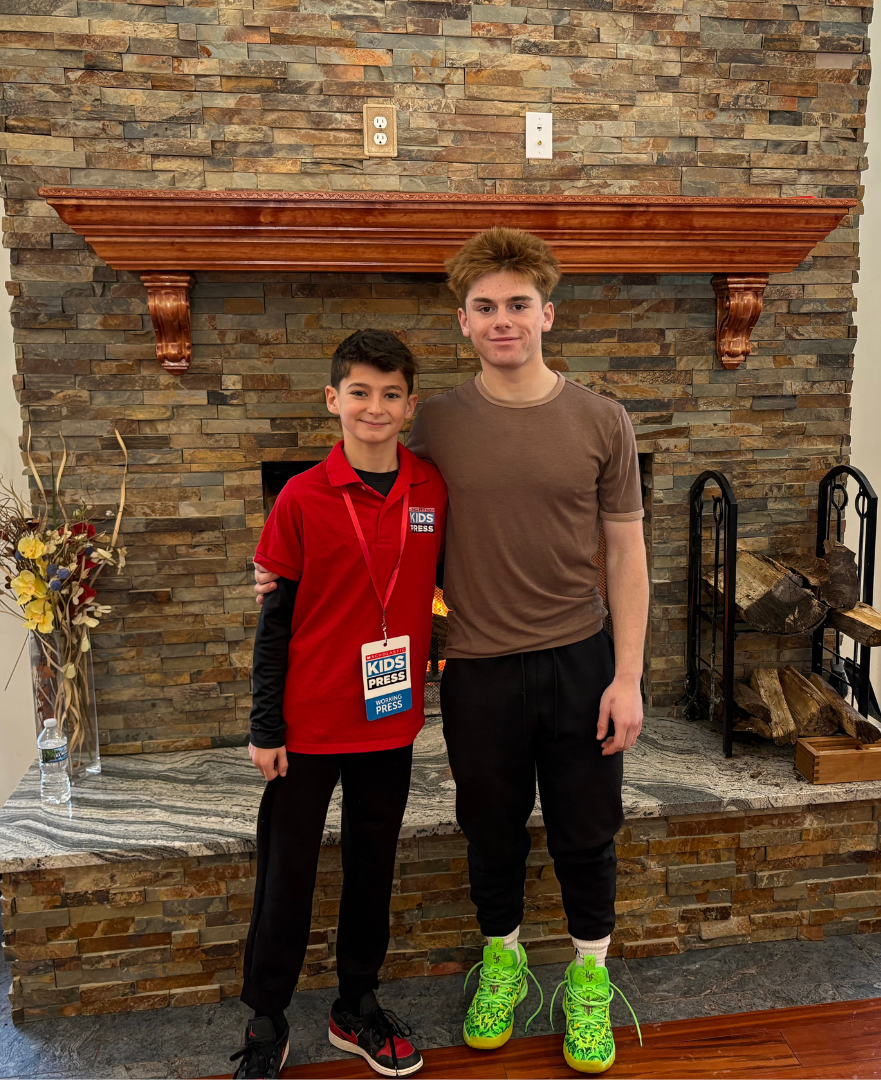
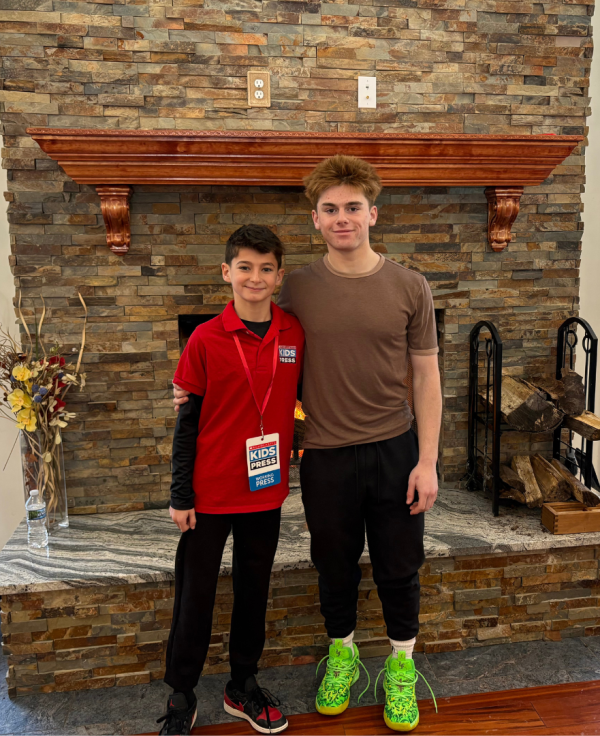
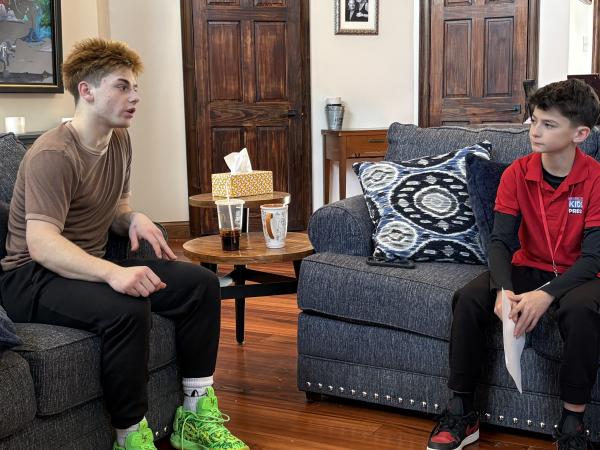
Scholastic Kid Reporter Asher Freije with speed skater Quinn Derheimer.

How One Teen is Pursuing his Goal to Achieve Olympic Gold

Scholastic Kid Reporter Asher Freije with speed skater Quinn Derheimer.

Scholastic Kid Reporter Asher Freije with speed skater Quinn Derheimer.

Though the 2026 Winter Games have come and gone, one future Olympic hopeful stays focused on the next games. Seventeen-year-old Quinn Derheimer is chasing his 2030 Olympic dream in competitive speed skating. 

Short track speed skating is an intense, fast-paced, competitive sport where athletes race to get the fastest time around a track, reaching speeds up to 35mph. 

Quinn started on the ice at a young age. “I started hockey when I was 5 years old. One day a team of speed skaters asked if I wanted to try on some speed skates and the rest is history.” 

He fell in love with the sport and began to train. After practicing at a nearby rink and reaching an elite level in the sport, Quinn and his family made the decision to train at the Pettit National Ice Center in Milwaukee, Wisconsin, despite living in Greenwood, Indiana. Quinn and his dad travel every Monday to Milwaukee for a week of training and back home to Indiana on the weekends. 

With a lot of success and glory comes much hard work. Quinn must train, research, eat well, and more to pursue a path to the Olympics. 

“Speed skating is a sport that takes dedication and a good mindset,” Quinn said. 

In middle school, Quinn joined Indiana Gateway Digital Academy, an online school program that allows him more flexibility in his training. He wakes up at 5 a.m. to practice before online learning begins and he is back to practice after school. He must wake up early for lifting, and then skate in the afternoon, with only a short two-month off season. 

All his hard work is paying off. Quinn is now nationally ranked and has competed in the Junior World Cup for speedskating. 

Even though Quinn is a nationally ranked speed skater, he makes sure to find time for his education. “The teachers are very flexible, and I try to fit in schoolwork along with family time,” he said. “I have kind of reached a flow state with all my activities.” 

Quinn Derheimer trains in Milwaukee during the week and returns home to Indiana on the weekends to spend time with his family.

Quinn Derheimer trains in Milwaukee during the week and returns home to Indiana on the weekends to spend time with his family.

Quinn said he loves the book Zero Regrets: Be Greater Than Yesterday by Apolo Ohno. The book is about Apolo’s journey as a speed skater and living his life without regrets. Quinn also said he has learned a lot about his sport from articles and reading in general. 

Significant sacrifice goes into making Quinn’s Olympic dream possible, but he believes it is all worth it. “You have to stay focused on what your goal is, one day at a time, one step at a time; don’t rush it.” 

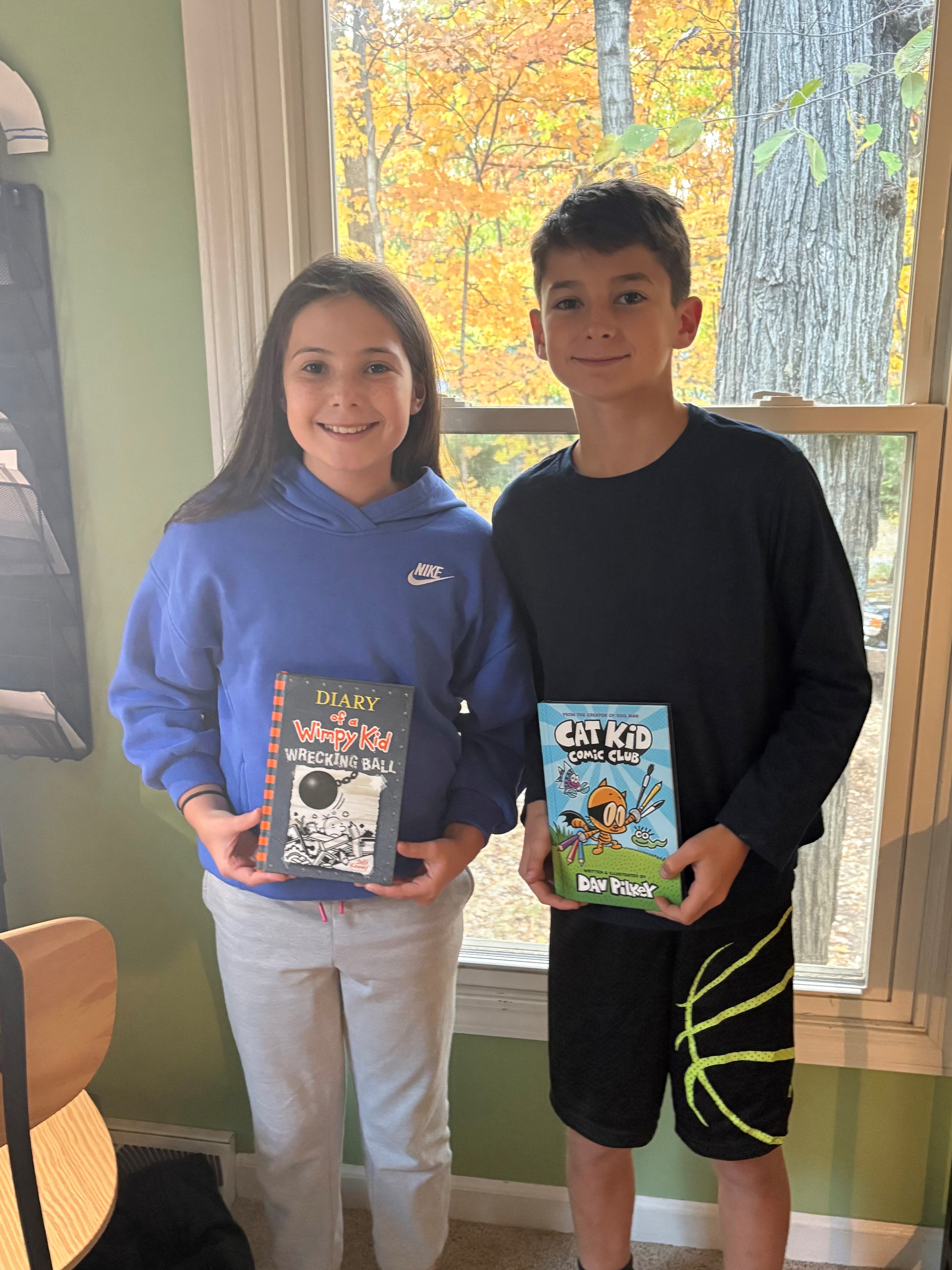
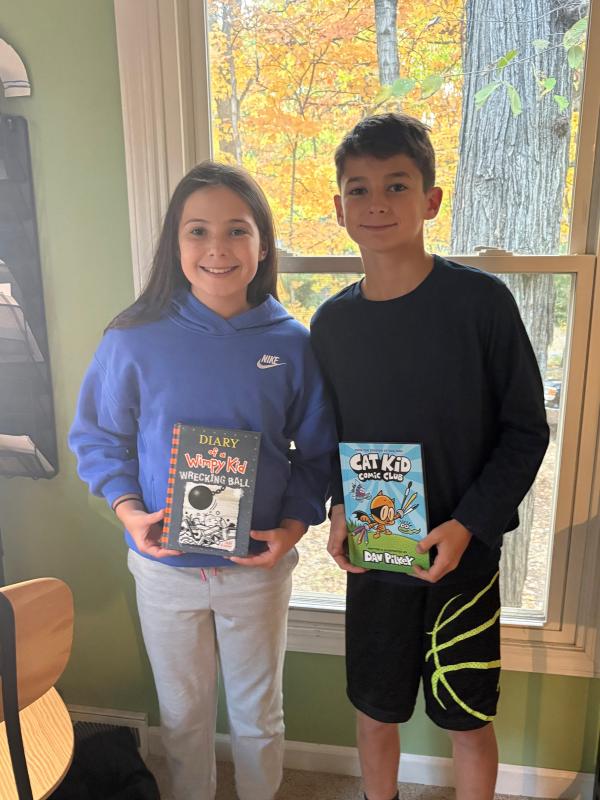
Kid Reporter Asher Freije and Tatum show off their favorite graphic novels.

The Popularity of Graphic Novels in the Classroom

Kid Reporter Asher Freije and Tatum show off their favorite graphic novels.

Kid Reporter Asher Freije and Tatum show off their favorite graphic novels.

With all that is happening in the busy world, it can be hard to find time to read. Adults and kids may find themselves not reading at all, or very little. But graphic novels, a book format similar to comic books, have taken the reading world by storm. According to the Scholastic Kids & Family Reading Report, since 2018 the number of kids who say they want to read graphic novels has risen from 22% to 37%, making it one of the fastest growing book formats.

In a day and age where it's hard to get kids to sit down and read a book, graphic novels are the perfect way to get them started. A book in a comic strip format, telling a story through pictures and text bubbles, piques the interest of many kids, and graphic novel series such as Dog Man, Big Nate, and Diary of a Wimpy Kidare consistently flying off the shelves.

Students in all different grades are noticing how popular graphic novels have become.

“Books like Dog Man seem to never be in stock because they’re so popular,” said Tatum, 6th grade.

“I used to read a lot of graphic novels in elementary school, which helped spark my interest in reading,” said Maddox, 9th grade.

Social media has made it much easier to get information and content in quick, short bits, affecting attention spans. But reading is a very important skill, and reading books has many good benefits. Teachers say given the popularity of social media, students may gravitate towards graphic novels because chapter books can seem like a bigger commitment.

“I think that kids appeal to these graphic novels because in this generation, we live in more short chat-like conversations,” shared Mrs. Elise, a 5th and 6th-grade teacher. “It may be easier, if you’re distractible, to settle into a graphic novel because you can jump right into the plot.”

For a lot of kids, starting with graphic novels can help spark their love for reading and can result in a long-lasting reading habit. And at the end of the day, whether you grab an article, a chapter book or a graphic novel, what’s important is finding time to read even when life is so busy.

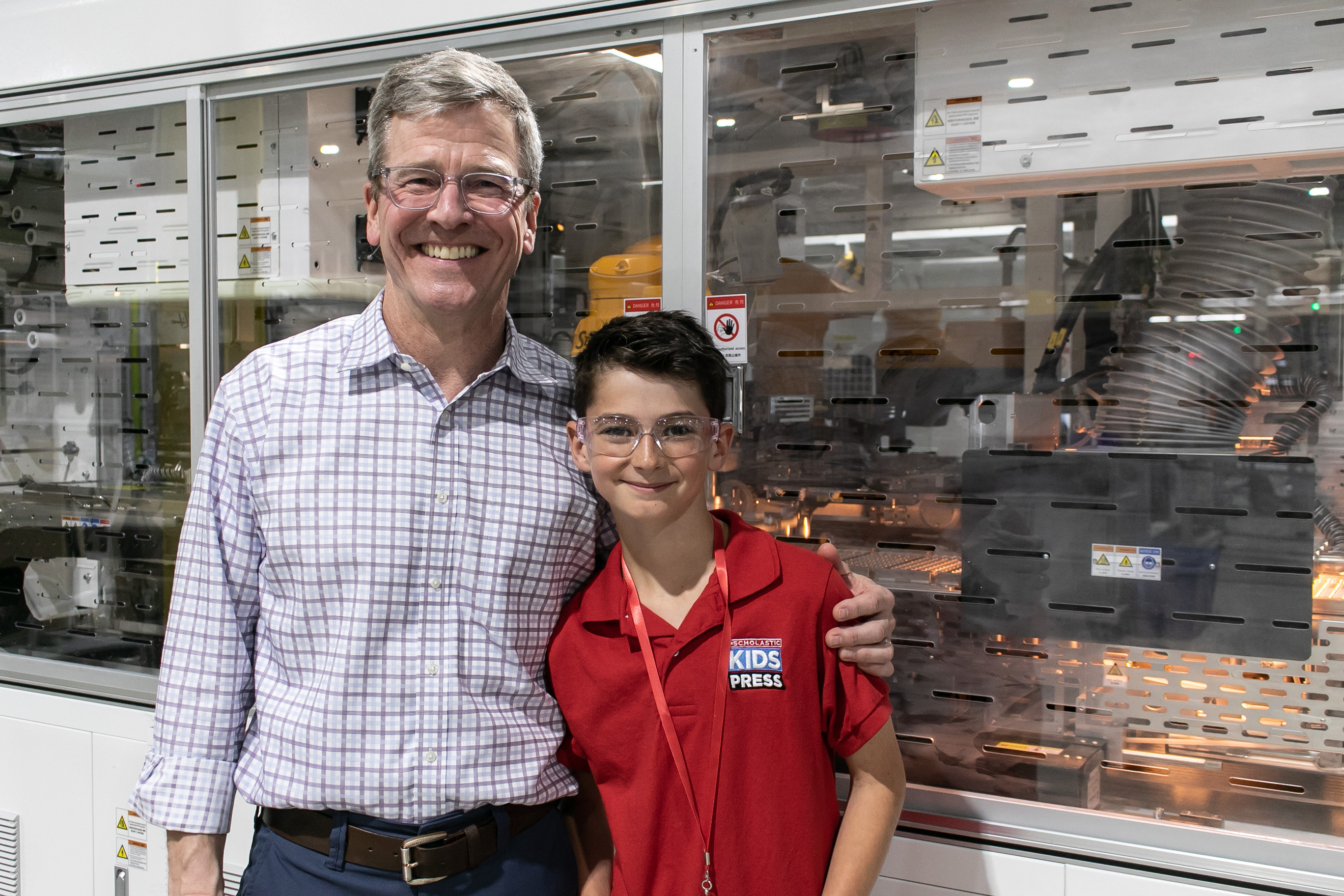
General Manager Mick McDaniel and Asher Freije

How Solar Energy Could Change the World

General Manager Mick McDaniel and Asher Freije

General Manager Mick McDaniel and Asher Freije

Did you know that the amount of sunlight that hits the Earth in one hour could provide enough power for our entire population for a year? Today, scientists and engineers are working to harness that endless supply of energy by working on solar panels.

A solar panel is a piece of technology that can convert sunlight into energy using solar cells, also called photovoltaic cells. There are many possibilities for how it can be used. Some ways include powering cars and homes, heating and cooling, and even water filtration.

According to the International Energy Agency, about 10% of our population lives without electricity. As renewable energy technologies improve, there are companies such as Bila Solar in Indiana that aim to fill this gap. Bila Solar is working to make their panels more affordable and drastically lighter. With less weight and thickness to a solar panel, Mick McDaniel, the General Manager of Bila Solar, shared that makes it much easier to set up.

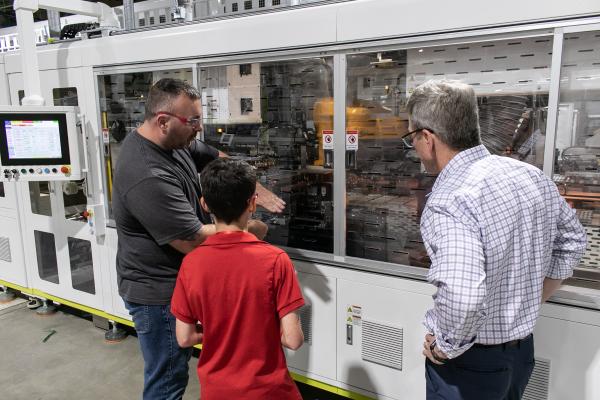
Kenneth Stead shares about the process of the solar panel manufacturing

Kenneth Stead shares about the process of the solar panel manufacturing

Non-renewable energy is energy that comes from a source that cannot be replenished, such as fossil fuels, nuclear energy, and coal. Engineers, architects, scientists, and other jobs are working on ways to replace depletable sources with renewable energy like solar power. According to National Geographic, non-renewable energy is also a big pollution factor. When fossil fuels like coal are burned, it releases small, harmful particles into the air that can harm the environment. “We want to bring and produce energy in this world, but without starting another problem.” says McDaniel. Solar power doesn’t emit greenhouse gases or air pollution. That makes it a much better substitute to unsustainable sources, according to McDaniel.

Inventions, like the solar panel, are the result of hard work and experience. It takes failures, learning, and curiosity. “I think curiosity is one of the most important things that we have.” says Jeni Hackett, a Scholastic Magazines+ editor and writer.

Science, Technology, Engineering, and Math (STEM) is a combination of all of those and more. STEM education teaches the next generation to innovate and find solutions. In the case of solar energy, it is not only helping some of the world’s climate and energy problems, but it is also providing huge growth in a variety of STEM-related jobs. For example, a single solar project might involve electrical engineers, mechanical and structural engineers, 3D designers, automation technicians, and much more. Jeni Hackett said, “STEM Education is a great springboard to jobs. It teaches you to think critically, find answers, and problem solve.”

Flying Solo on the American Airlines’ Unaccompanied Minors Program

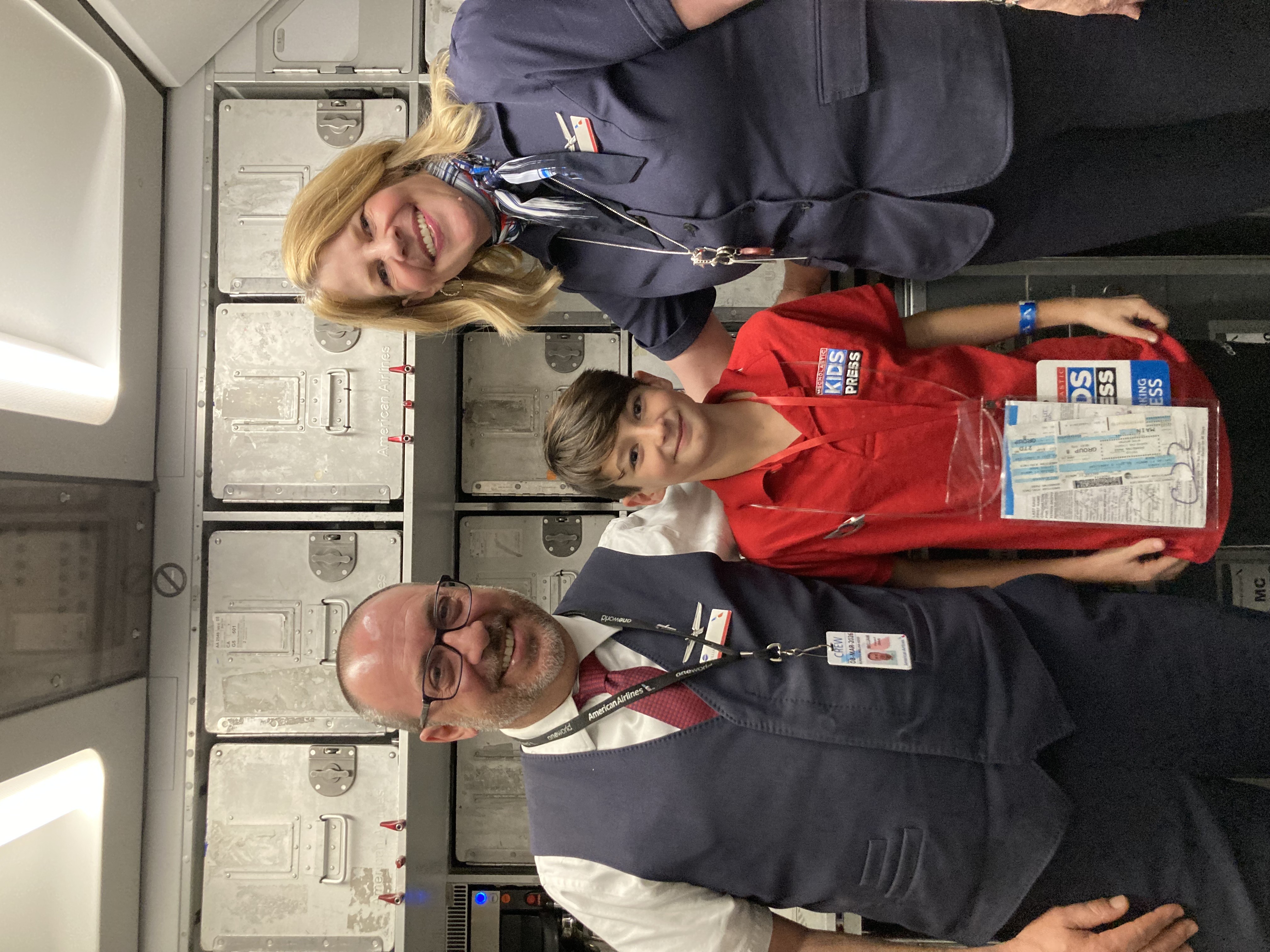
Scholastic Kid Reporter Asher Freije with American Airlines employees

Over the Christmas and New Year’s break, an estimated 119 million people traveled by air for the holidays, breaking the previous record set in 2019. Among these travelers, my eleven-year-old sister and I used the American Airlines’ Unaccompanied Minors (UM) program to fly from Indiana to Arkansas. 

Airport Procedures upon Arrival

To ensure the safety of young travelers, most airlines require minors aged 5-14 to use the UM service which comes with a fee in addition to the ticket price. Upon arrival at the American Airlines counter at the airport, we were given a pouch to wear around our necks. This pouch contained flight information and helped airport staff identify our destination and pickup arrangements. Additionally, we were given brightly colored bracelets for our wrists and backpacks that included our flight numbers.

Parents are given a special pass to escort unaccompanied minors from the ticket counter through security and to the gate. My sister and I were the first to board our connecting flight to Dallas, and my mom was required to stay in the boarding area until the flight departed. 

In-Flight Experience

Flight attendants are incredibly helpful throughout the process. When my sister and I boarded our first flight, I was initially a bit nervous, but the flight attendant, Hannah, was friendly and kind.  She gave us snacks and made us feel as comfortable as possible. Throughout the plane rides, we had to ride in the back two seats for extra flight attendant supervision. “As a UM, you will always be placed in the back to be watched over,” our flight attendant, Lisa, stated.

Many UM programs have a protocol in place for connecting flights and layovers. Specifically, American Airlines has kids-only lounges in hub cities. When we landed in Dallas for our two-hour layover we checked into the kids-only lounge. We were asked the same three questions that were asked every time we were with a new escort or employee. The questions were who was picking us up, who dropped us off, and the location of our destination. The lounge consisted of snack boxes, couches and chairs, bathrooms, and vending machines. The room was located behind a clear wall where the UM desk employees were.

UM programs also include early boarding time. We left the lounge 45 minutes before boarding, which gave us plenty of time to make our flight and meet the flight attendants.

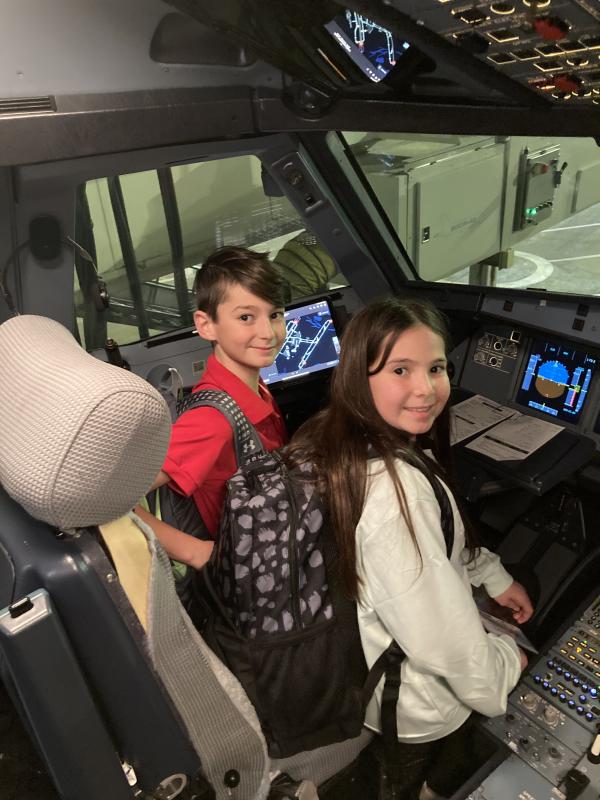
Scholastic Kid Reporter and his sister visit the cockpit during their trip

Navigating Landing and Meeting your Pickup Person

Once we landed, we were taken to an escort to where our uncle would be picking us up. “The escort will hand the adult some paperwork to fill, and then you’ll be handed off to enjoy your vacation,” flight attendant, Hannah, stated.

On our return trip home, we connected through Charlotte. Our escort Shelby met us when we got off the plane. “My job is to get you from gate to gate safely,” she said. And when our flight was delayed, she stayed with us the entire time.

All in all, flying was a journey in itself, but with kind and trustworthy escorts and flight attendants, American Airlines made it easy.

Indiana Lawyer Brings Fashion to Dogs


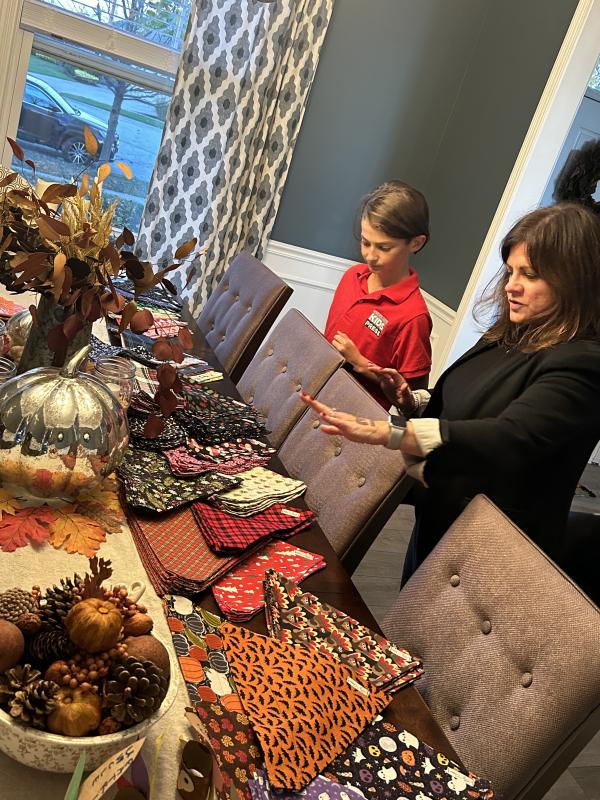
When Indiana lawyer Kori Chambers needed a hobby to help reduce her stress, and allow her to use her creativity, her dogs, Lily and Cooper, provided the answer! Chambers began making reversible dog bandanas that could be worn with their collars. What started as a fun pastime, quickly grew into a profitable small business. 

According to the U.S. Small Business Association, small businesses account for 44% of American economic activity. I interviewed Chambers and her black Labradors, Lily and Cooper, who are her inspiration and the namesake of her business, about her experiences going from courtrooms to canine clothes.

“When normal tie bandanas we’re not working out for my dogs, I thought, what is another way?” she said. Like many pet owners, Chambers enjoyed dressing Lily and Cooper up for the holidays or other special occasions, but traditional tie bandanas wouldn't stay put. So, Chambers taught herself how to sew and started making ones that could easily slide on and off over their collars.

Chambers began selling Lily and Cooper products online, registering her own domain (lilyandcooperllc.com) and building the website. She also sold at local farmers' markets and craft fairs. She sold so many that she needed to hire an employee to keep up with the demand. Beginning January 1, Lily and Cooper products will also be sold in a local retail store.

Beyond Business: When Help Brings Hope

Needing assistance, Chambers partnered with Exodus, an Indianapolis-based organization that works with refugees as they get settled in the United States. One of the goals of Exodus is to help refugees find employment, which can be a challenge with the language and cultural barriers.

“We don’t need to speak the same language for you to know how to sew a bandana,” Chambers explained. “Sewing is the same in every language you speak.” Chambers now employs a woman from Burma, who sews bandanas from her home. Her new hire now has stable employment and income, while allowing Chambers to increase the volume of her product and keep items in stock.

The Indiana Department of Workforce Development stated that Indianapolis is home to the largest Burmese refugee community in the United States, consisting of approximately 24,000 as of 2020.

When asked for advice to young entrepreneurs, Chambers said "To go and try it. I never thought that something like dog bandanas would take off the way that it has. If you have a good idea and you like it, and your friends want it, a whole lot of other people probably want it too! Sometimes I think we think our ideas are not good enough, or maybe no one wants it. But I would say for any kids thinking about creating something, to try it! Because it really could succeed.”

Chambers is encouraging the next generation of entrepreneurs, one dog bandana at a time.

After Hurricanes, Utility Workers Restore Power

Utility line workers are crucial to the functioning of the country.

When you hear the word “lineman,” you may imagine a sturdy athlete on a football field who tackles other players. But electrical linemen are actually essential to the functioning of our country. They are among the first individuals who respond to a natural disaster.

In late September and early October, Hurricanes Helene and Milton brought damaging winds and rain to the Southern United States. Electrical linemen from across the country mobilized to help restore downed power lines and electrical systems in the affected areas. 

Line workers need physical endurance and specialized training. Many of them work with voltages of power so high that they could cause electrocution.

“Linemen and women are hard at work to restore power for local communities,” Mallory Duncan, director of communications for AES Indiana, told me after the hurricanes. 

AES is a utility company whose initials stand for Applied Energy Service. It supplies power for the city of Indianapolis. When a hurricane or blizzard occurs in another part of the country, workers may be deployed to those areas to help with power line repairs. 
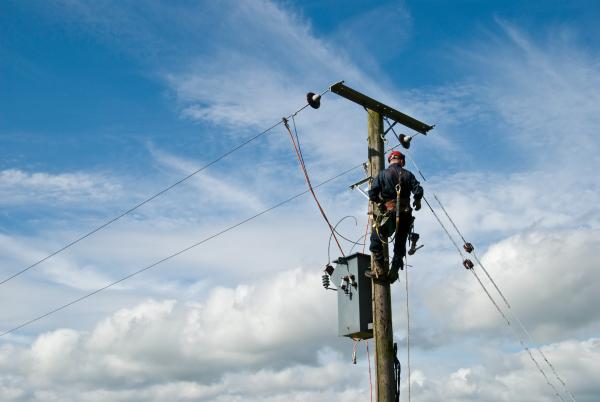
 

According to the U.S. Bureau of Labor Statistics, an estimated 123,400 individuals work as electrical linemen across the country. 

“FIRST RESPONDERS”

According to the U.S. Bureau of Labor Statistics, there are approximately 123,400 linemen jobs in the U.S. It’s a fast-growing industry, so more jobs are continually being added. An increasing number of women are entering the profession. 

In March 2024, the U.S. Congress introduced legislation to officially classify linemen as emergency response providers. “Like our other emergency responders, utility line technicians are among the first to put themselves in harm’s way after disaster strikes,” U.S. Representative Donald Norcross of New Jersey said in a press release that month. Norcross co-sponsored the bill.

The Linemen Legacy Act would make linemen part of the Homeland Security Act of 2002, which classifies firefighters, emergency medical technicians, and other public safety officials as first responders.

Many people wonder about the difference between linemen and electricians. Linemen work outdoors with high-voltage transmission lines (power lines) and other electrial systems. They typically work for utility or telecommunications companies, or companies that repair electrical lines and related infrastructure. Electricians usually work indoors with lower voltage systems. They are often employed at construction sites and factories. They also install and repair lighting systems in homes and businesses.  
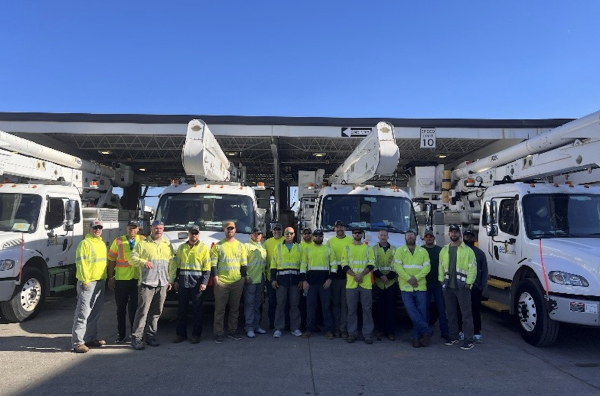
 

After Hurricane Helene, several AES linemen traveled from Indiana to Florida to help get power lines back up and running. 

ANSWERING THE CALL

After Helene and Milton wreaked havoc, line workers from across the country were sent to Florida, Georgia, and the Carolinas to help restore power. At least 37 states sent crews to Florida alone to repair the damage caused by Hurricane Helene.

“Men and women of AES worked 5-10 days straight to help get power back to residents, not just in Indiana, but also in Florida,” Duncan said.

Duncan, Representative Norcross, and others say that it’s important to give these unsung heroes the recognition they deserve. 
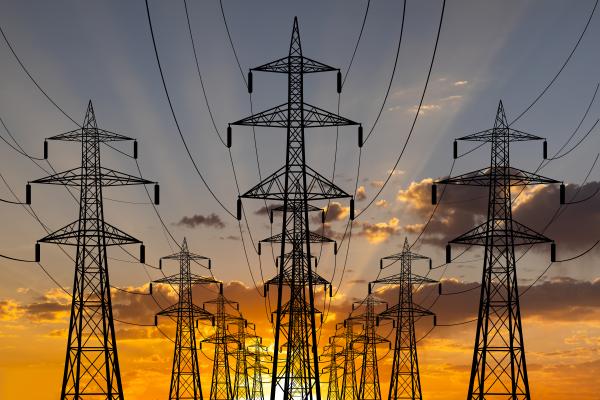
  

Power lines across the U.S. transport elecricity generated at power plants to homes and businesses. 
Subscribe to RSS - Freije