KID REPORTERS’ NOTEBOOK
What reading formats do kids use today?
Leyla Saldanha April 8th, 2026
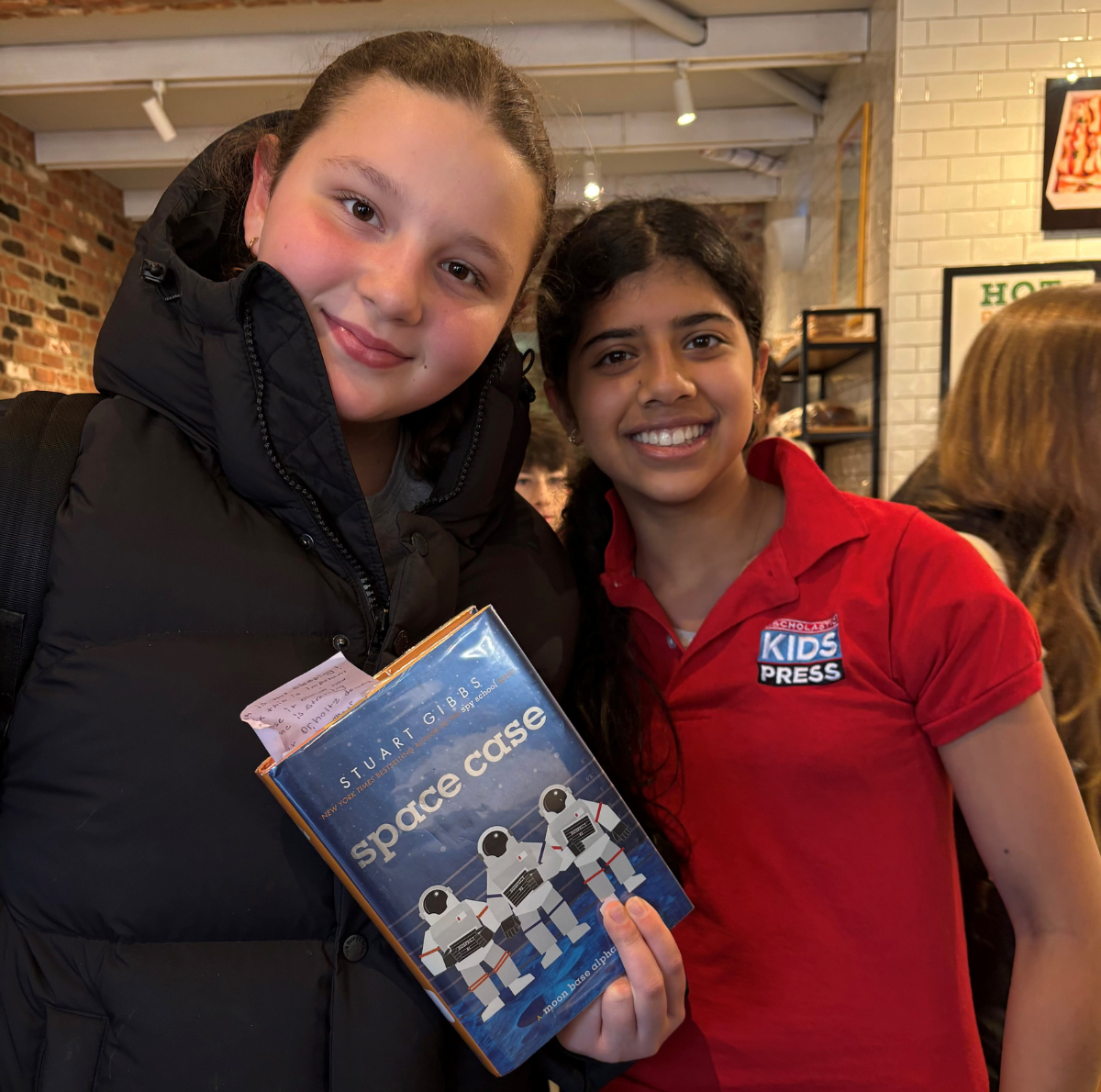
Scholastic Kid Reporter Leyla Saldanha and Rosie Bondy, age 13, with a print book, the preference for many students when reading.
In today’s digital age, reading is no longer limited to printed books. Young readers have an array of options including physical books, e-books, audiobooks, and online blogs. These different reading formats allow kids and teens to read anytime and anywhere, making reading more accessible and enjoyable.
Online Reading and E-Books
Students no longer have to wait to visit a library or bookstore to find a book they want to read. With just a few clicks, they can choose from hundreds of novels or research articles to download instantly. Libraries are great places for accessing digital collections, which is especially helpful for students who may not have easy access to physical libraries.
Digital options can remove certain geographic and financial barriers that prevent some students from finding books that interest them and provide them with so many more choices, which is so important since, according to the Scholastic Kids & Family Reading Report™, 92% of children agree they are more likely to finish a book they pick out on their own.
Mira, a 10th grader, said, “I normally read on my computer using online libraries like Sora and Libby. It's easy, and I can pull out my computer and read anytime I want.”
However, preferences can vary. Some students find it difficult to focus when reading on a screen because of distractions like notifications from other apps or the ability to quickly search something online. Lila, who is in 7th grade, said, “I can't stand reading online. It makes my eyes hurt.” Like Lila, some students experience eye strain or headaches from staring at screens for long periods of time.
Audiobooks
Listening to audiobooks is another option for young readers today. Mary Beth Crosby Carroll, a reading specialist at The Children’s School in Brooklyn, NY, told Scholastic Parents that following along visually while listening to an audiobook can enhance word-recognition ability, while listening alone can expand a student’s vocabulary.
Anya, a 6th grader, said, “I prefer audiobooks. It's easy, and I can finish a book in a couple of days, but some people think that listening to a book is not the same as reading a whole book.”
Physical Books
A traditional print book is still the go-to reading format for many young people. In fact, the 7th edition of the Scholastic Kids & Family Reading Report™ found that sixty-nine percent of kids say they prefer reading books printed on paper, even though e-books are available.
A 7th grader said, “Online reading might be faster, but I prefer holding a book in my hand. It's more comfortable than holding my phone or computer.”
Regardless of the format, reading is important. From research, beyond academic success and better physical health, a commitment to literacy and a love of reading can be powerful tools in supporting mental health, including boosting self-esteem, increasing empathy, and mitigating anxiety and depression (Scholastic Reading for Life). Having a variety of options available ensures that more students have access to books when they need and want them.
Photo courtesy of the author