
KID REPORTERS’ NOTEBOOK
A Synthesis of Science and Storytelling: Secrets of the Bees Educates Viewers About a Tiny, Yet Intelligent Species
Kush Kalra April 1st, 2026
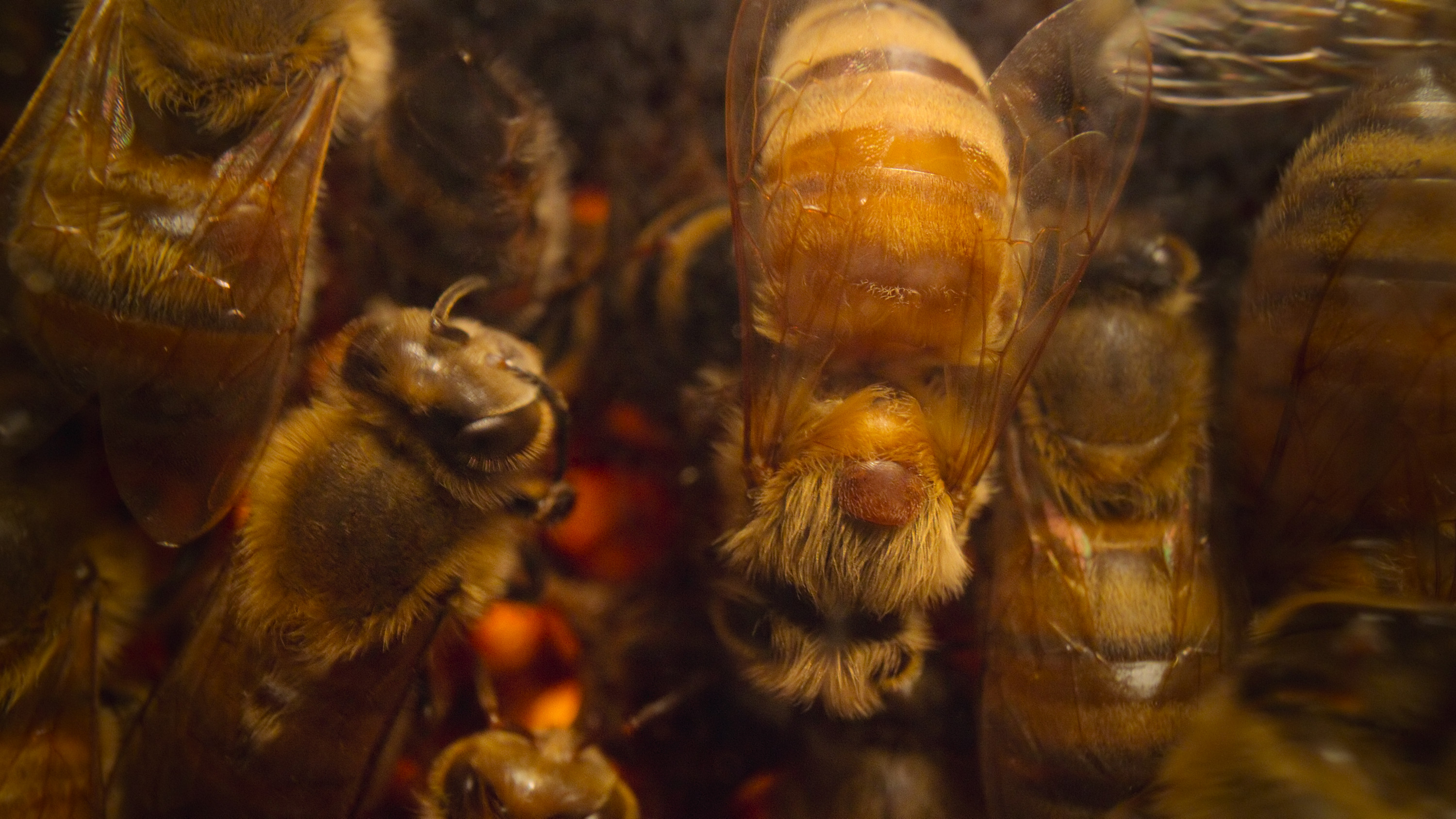
The production team used stunning macro photography to observe every aspect of the bees’ lives. (Credit: National Geographic)
They are intricate builders, dedicated mothers, and one of the most brilliant species on Earth. And yet, they are less than two inches long. Meet the bee: a four-winged insect capable of flying for miles, giving birth 2,000 times a day, and responsible for pollinating a third of the food we eat.
Their ubiquitous civilizations span almost every continent, adding $18 billion to American crop production annually. Bees have become a primary focus of climate activism and entertainment, with award-winning filmmaker James Cameron producing the newest National Geographic series, Secrets of the Bees, which premiered on March 31st.
I was fortunate to interview Cameron and Dr. Sammy Ramsey, a Professor of Entomology and a featured Bee Scientist on the docuseries. Cameron and Ramsey, both environmental advocates, share a love for nature.
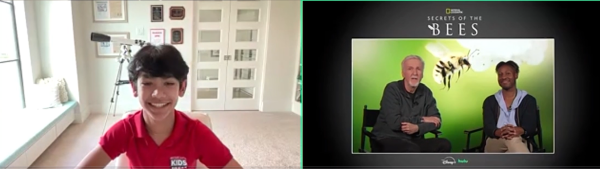
Scholastic Kid Reporter Kush Kalra interviews Executive Producer James Cameron and Entomologist Dr. Sammy Ramsey
Wonder, Then Discover
As a child, Cameron was a voracious reader of science fiction novels. His love of literacy sparked a fascination with nature as he spent much of his childhood exploring a forest near his home in Chippawa, Ontario. As an adult, his interest in the outdoors has transcended to the screen through projects like Titanic, Avatar, and now Secrets of the Bees.
“I spent all my time [as a child] out in the woods collecting bugs, frogs, and everything I could get my hands on. [I loved] reading, dissecting, and preserving, so I was kind of a junior naturalist. [This genuine] curiosity is our superpower as humans, and science is a natural extension of that,” Cameron said.
As kids work to better understand the world around them, having access to clear and reliable information is important. Nicole Tocco, Senior Editorial Director of Scholastic News, says, “Topics like conservation are essential as we work to build understanding and empower young readers with knowledge that will carry them into the future.”
In a recent Scholastic News Edition 4 article, Tocco’s team explores ways that kids can help protect bees. She explains, “By learning about bees, kids will realize how even the smallest creatures can make a big impact—and understand that their actions matter, too.”
Blending Narratives with Nature
In nature documentaries, scientists and producers collaborate to balance an engaging storyline with scientific accuracy. Secrets of the Bees was born by combining Cameron’s storytelling expertise and Ramsey’s bee knowledge. Cameron, the executive producer, underscores the importance of creating a relatable narrative by understanding animal realities.
“Animals [are] the protagonists of the story,” Cameron said. “[We] want to understand what motivates them. What makes them afraid? What are their goals? With bees, they’re [working] together to raise their next generation and keep their community alive. A lot of things we can relate to.”
According to research from Penn State University, American beekeepers have lost about 30% of their colonies annually since 2006. Dr. Ramsey shares simple ways to help bees sustain their ecosystems.
“If you have one square foot where you can plant flowers, please take advantage of that. You [can] feed hundreds of pollinators with just one square foot. If you have [a] yard, backyard, front yard, re-wild that thing,” he explained.
Rewriting The Initiative
The “save the bees” movement began in the early 2000s after scientists learned that climate change was destroying bee colonies. However, Ramsey explains the nuanced meaning of the platform, given there are over 20,000 bee species.
“Oftentimes, when we say 'save the bees,' we mean 'save the bee.’ We’re thinking about the one bee species that we keep inside a box because [it’s] most precious to us. We want [viewers] to expand that phrase back to ‘save the bees’ to keep the rest of them safe, healthy, and happy,” Ramsey said.
Although bees and humans may seem distantly connected, our actions have a symbiotic impact on their ecosystems. Cameron delineated how documentaries like Secrets of the Bees aim to enthrall viewers with nature so they will care more about our planet and thus take more action to protect it.
“We make choices as a civilization, and [these] choices have consequences. I think the way [to get] people to think of these consequences is to let them see the victims. If we can relate to these bees, then we may start to make better choices,” he adds.
Cameron and Ramsey both want viewers to empathize and relate to the bees’ struggles. They hope this deeper understanding of nature will encourage people to be more thoughtful of their environment. Ramsey depicts the beauty in observing these minuscule insects and their extraordinary behaviors:
“A lot of the most [remarkable] discoveries come from patience. We have to wait, watch, and really allow for time to show us the incredible Secrets of the Bees.”