KID REPORTERS’ NOTEBOOK
The Return of Cursive Writing
Xander Dorsey August 17th, 2026
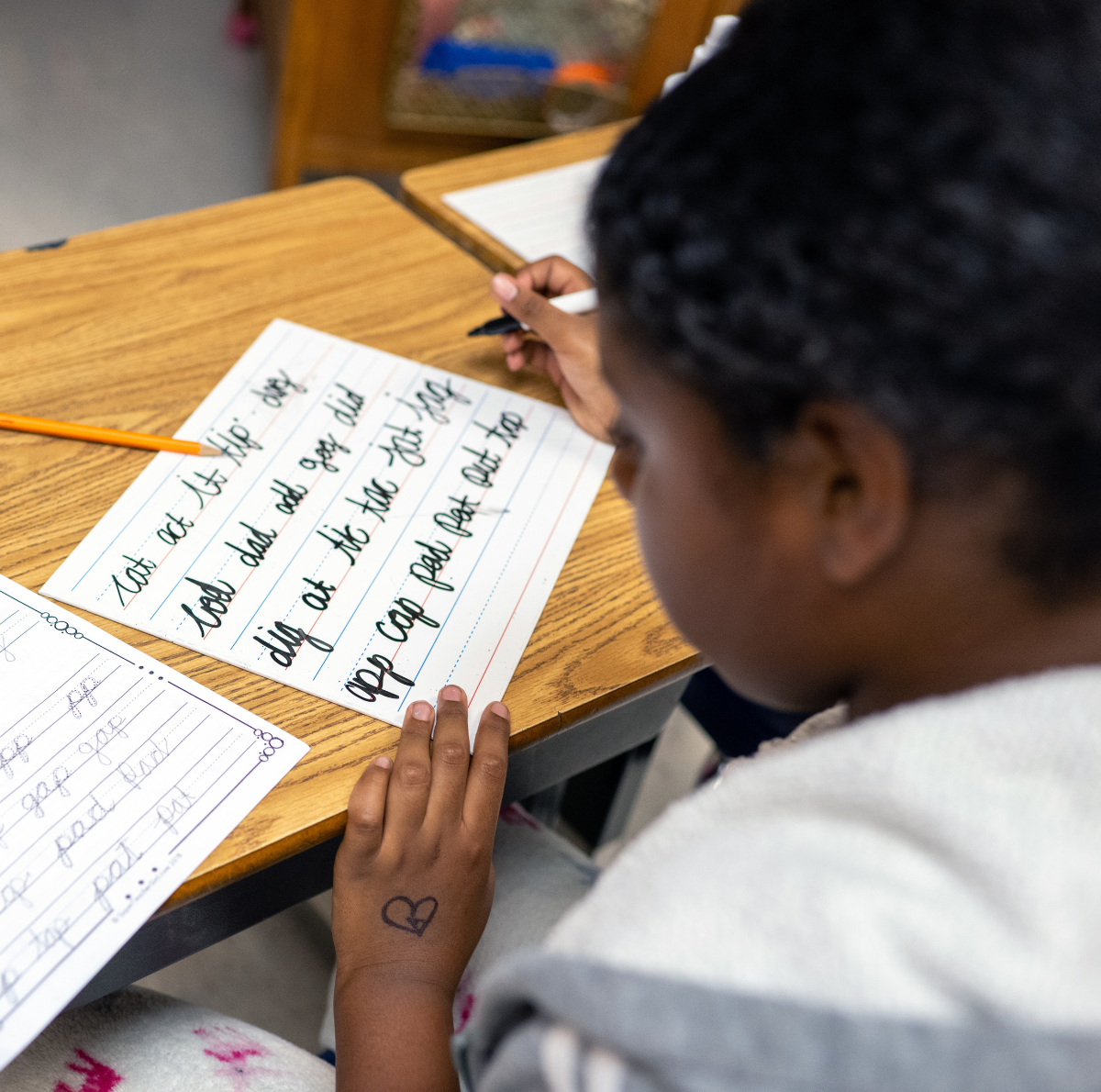
For many young people, learning cursive isn't just about handwriting, it's another way to communicate, create, and tell their own stories (photo courtesy of Karen Bolt, Fairfax County Public Schools).
Many students today spend more time typing than writing by hand, but some educators believe cursive still has an important place in the classroom. A middle school teacher in Virginia is helping students learn the skill through an after-school club, while handwritten journals and notebooks sold at Scholastic Book Fairs continue to inspire creativity among young readers and writers. Together, these trends point to a growing interest in putting pen to paper.
A Classroom Discovery
Sherisse Kenerson, a multilingual teacher at Holmes Middle School, never planned to start a cursive club at her school. The idea came to her while she was teaching a summer program and wrote on the board in cursive, assuming the students would understand it. Instead, many of them were confused.
“I was like, ‘Are you kidding me? No one here knows cursive?’” Kenerson said.
That moment led her to create an after-school cursive club, which has continued for four years.
More Than Handwriting
Kenerson says cursive offers benefits beyond neat handwriting. She explained that research has shown it can support brain development, improve writing speed, and help some students who have dyslexia.
Learning cursive can also help students read historical documents that were written before the widespread adoption of computers. Many important letters, journals, and records are written entirely in cursive.

The creator tools at Scholastic Book Fairs provide kids with an outlet to express themselves (photo courtesy of Scholastic).
Writing as Self-Expression
At Scholastic Book Fairs, students are showing enthusiasm for journals, notebooks, pens, and other creator tools.
Laura Lundgren, Chief Marketing Officer of Scholastic's Children's Book Group, said giving students access to these tools alongside books provides them with an outlet to express themselves.
“Kids are very excited about self-expression,” Lundgren said. “They're very excited about writing their own stories or expressing themselves. Putting a pen to paper is very different than typing on a keyboard. It is much more personal. You can really put your personality into it, and I think that's one of the things that kids love about having a blank notebook or a blank journal.”
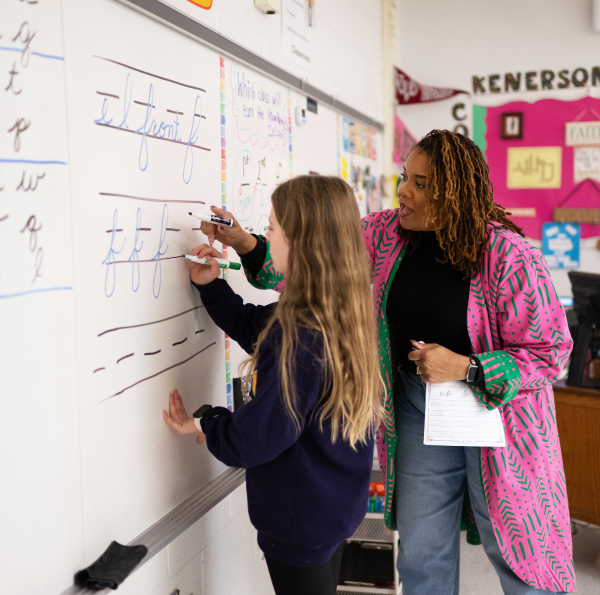
Sherisse Kenerson at her after-school cursive club (photo courtesy of Karen Bolt, Fairfax County Public Schools).
Gaining Confidence, One Letter at a Time
According to Kenerson, students often struggle at first because cursive requires them to learn new letter forms and connect letters without lifting their pencils. But with practice, many become confident writers.
"The students feel very empowered," Kenerson said. "They definitely feel like they're a superhero that can do things that someone else cannot do."
Lundgren agrees that writing helps students gain confidence and foster creativity.
“I think if you just start writing, you start to think of yourself as a writer,” Lundgren said. “And, you know, not every kid is going to see themselves as a writer, but every kid can be a writer. Expressing your ideas, expressing your feelings — even just going through that exercise of writing — is such a wonderful skill to acquire, and it should be available to all kids.”
As students continue to balance digital tools with traditional skills, cursive may be finding a new audience. For many young people, learning cursive isn't just about handwriting, it's another way to communicate, create, and tell their own stories.
“When writing feels more like an art project than schoolwork, when writing feels really unique to you as a person, kids want to show it off, and I think it makes you want to practice it,” Lundgren said. “And I think cursive writing is that kind of format … I hope kids do keep learning it.”

Scholastic Kid Reporter Xander Dorsey with Sherisse Kenerson and Steven Brasley, Media Outreach Specialist, Fairfax County Public Schools (photo credit: Steven Brasley).