
KID REPORTERS’ NOTEBOOK
Inside the Smithsonian’s New Bison Exhibit in Washington, D.C.
Leyla Saldanha June 23rd, 2026
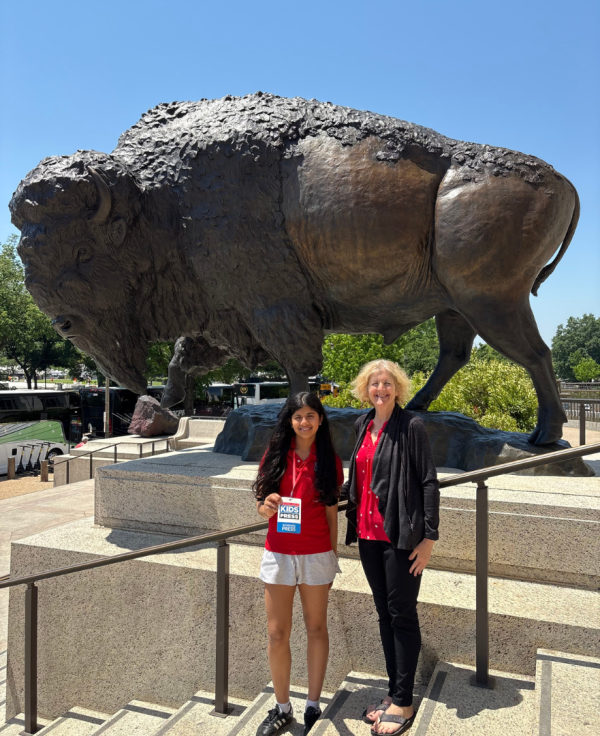
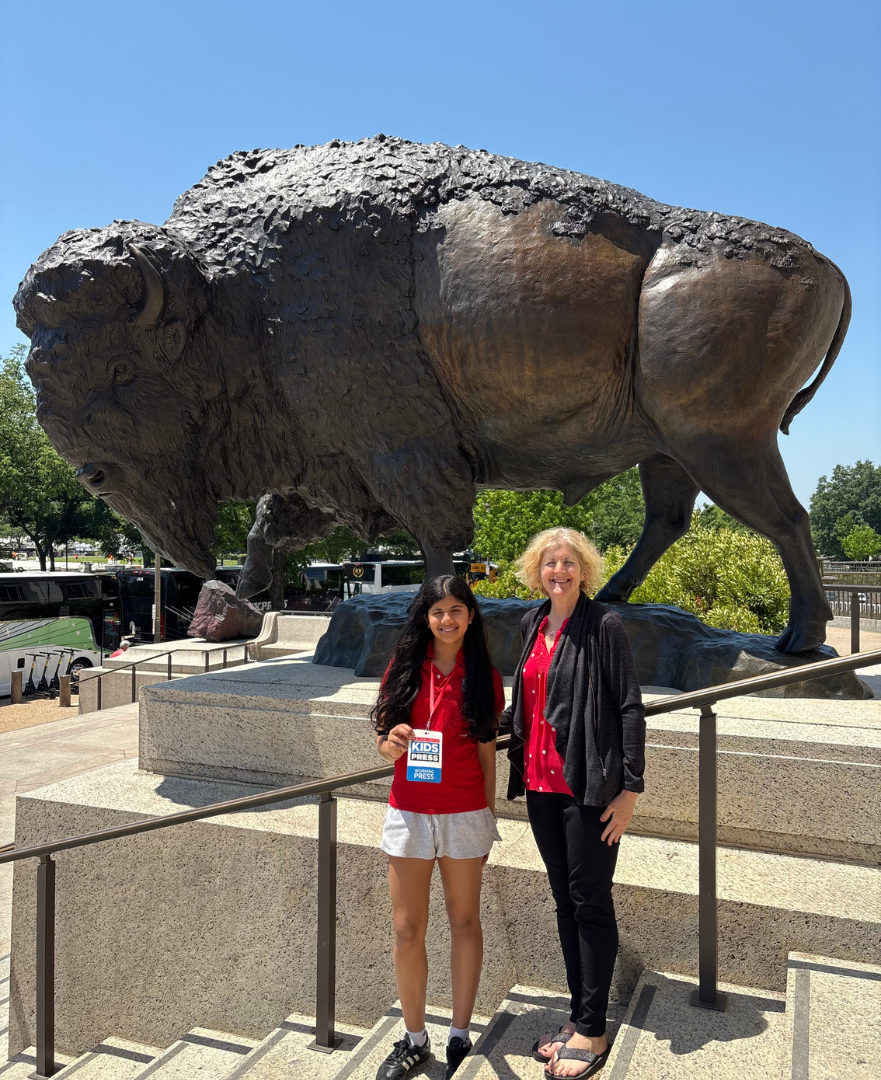
Scholastic Kid Reporter Leyla Saldanha standing in front of a bronze bison statue with Siobhan Starrs, Exhibition Developer and Project Manager at the Smithsonian.
A Giant Welcome on the National Mall
Visitors arriving at the Smithsonian National Museum of National History are now greeted by an unforgettable sight, three monumental bronze bison sculptures. These statues are part of a traveling installation that crossed multiple states before arriving in Washington, D.C.
A new exhibit will bring to life the story of American bison using science, history, and culture to create an immersive experience. This is part of Our Shared Future: 250, a nationwide Smithsonian initiative celebrating the 250th anniversary of the United States. Through exhibits, events, and programs, the initiative invites Americans to explore the country’s past while thinking about its future.
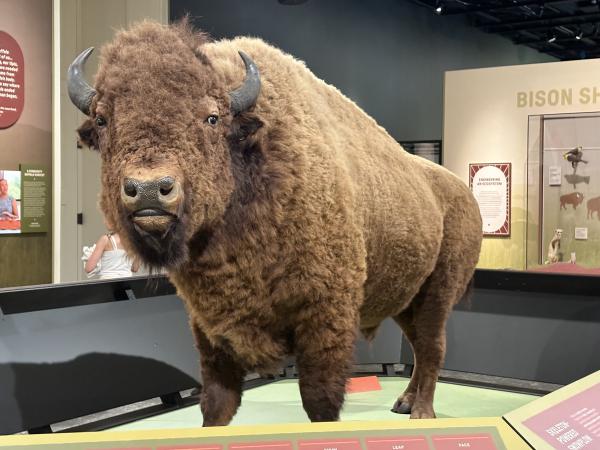
The Bison: Standing Strong exhibit will be open at the Smithsonian National Museum of National History until May 2029.
Why Bison Matter
The American bison are an important part of North American history. Bison shaped entire ecosystems and served as a resource for many indigenous communities like the Comanche, Arapaho, and Mandan.
The exhibition follows this species from ancient times to the present. Fossils, mounted specimens, and images of bison-related objects will be on display from across the Smithsonian’s collection. Siobhan Starrs, Exhibition Developer and Project Manager at the Smithsonian, shared what makes this such a special moment in time, “We now have the national mammal on the national mall in the nation’s capital, at the national natural history museum."
The exhibit shows through maps, photographs, and written accounts how hunting, railroad expansion, and government policies contributed to near extinction of the bison population. Starrs said, “[the bison] almost all died. In the 1800s, we were down to less than a thousand and by some counts less than 500.” Thanks to conservation efforts, including the establishment of protected herds in places like Yellowstone and the efforts of tribal nations to reintroduce bison to their lands, bison populations grew.
The museum's displays show how indigenous nations relied on bison for food, clothing, tools, and shelter, using almost every part of the animal. Starrs remarked, “We share a lot of stories from tribal nations as told by amazing advisors from different tribes who participated in developing the exhibit. These are stories that have never been told before.” For visitors who will walk into the space, Starrs shared that it will be a unique experience to hear these inspiring stories told for the first time in the voice of the person telling them.
When asked what she wants people to take away from their visit, Starrs said, “I really want people to get curious about bison, but not just bison, get curious about whatever animal or plant bird lives near them, that they find as amazing, inspiring, and iconic as bison.” In the end, the exhibit lets people of all ages get a chance to learn and appreciate the bison, through statues, stories, and artifacts that truly immerse visitors in the story of the bison.
Be sure to check out the Bison: Standing Strong which opened in 2026 and will be on view through May 2029.
Photos courtesy of the author